From Dolby
Atmos to Live
How our work in Dolby Atmos led us into live immersive sound at The Rich Mix, London, alongside Scientist (Hopeton Brown), Greg Hunter and TiMax Audio.
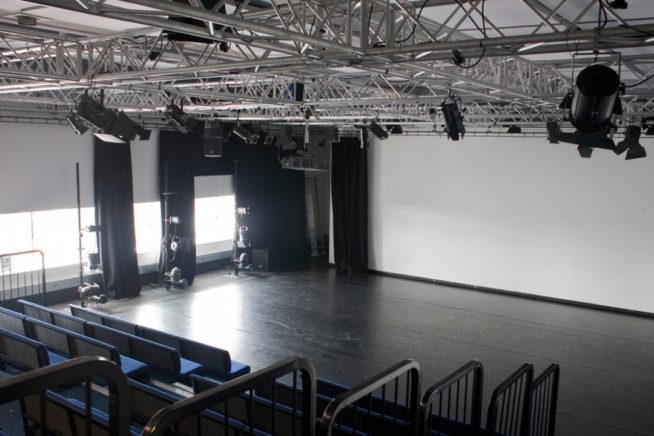
Every immersive journey has a starting point. Ours began with Dolby Atmos.
Working in immersive mastering, quality control and delivery gave us a deep understanding of object-based audio and how individual sound objects exist independently within a three-dimensional space. Unlike traditional channel-based formats, Dolby Atmos allows a single immersive master to be intelligently rendered across multiple playback environments—from full 9.1.4 loudspeaker systems through to 7.1.4,5.1, quadraphonic, stereo and binaural headphone playback—while preserving the creative intent of the mix. This intelligent rendering process is one of the defining strengths of the format and is made possible by the Dolby Atmos Renderer.
That flexibility transformed the way we think about sound. It taught us that immersive audio is not simply about adding more loudspeakers; it is about creating a listening experience that adapts naturally to its environment while maintaining the artist's vision. The mastering studio became our laboratory, where every project deepened our understanding of spatial audio and revealed new creative possibilities.
But understanding immersive audio inside the mastering studio was only the beginning.
We wanted to discover what would happen when those same spatial principles left the controlled environment of the studio and entered the unpredictability of a live performance, where musicians, audiences, venue acoustics and loudspeaker systems all interact in real time. Could the same sense of immersion be achieved in front of a live audience? Could spatial audio become part of the performance itself rather than simply the final delivery format?
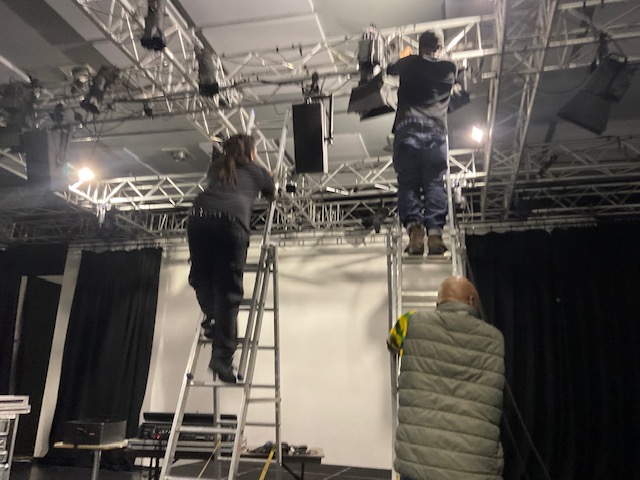
That opportunity came through the Certain Blacks Athena Festival at The Rich Mix in London, where we had the privilege of collaborating with legendary Jamaican recording engineer and dub pioneer Scientist (Hopeton Brown). For more than five decades, Scientist has redefined the creative use of space, echo and live mixing, influencing generations of artists, producers and engineers while helping to shape the sound of modern dub.
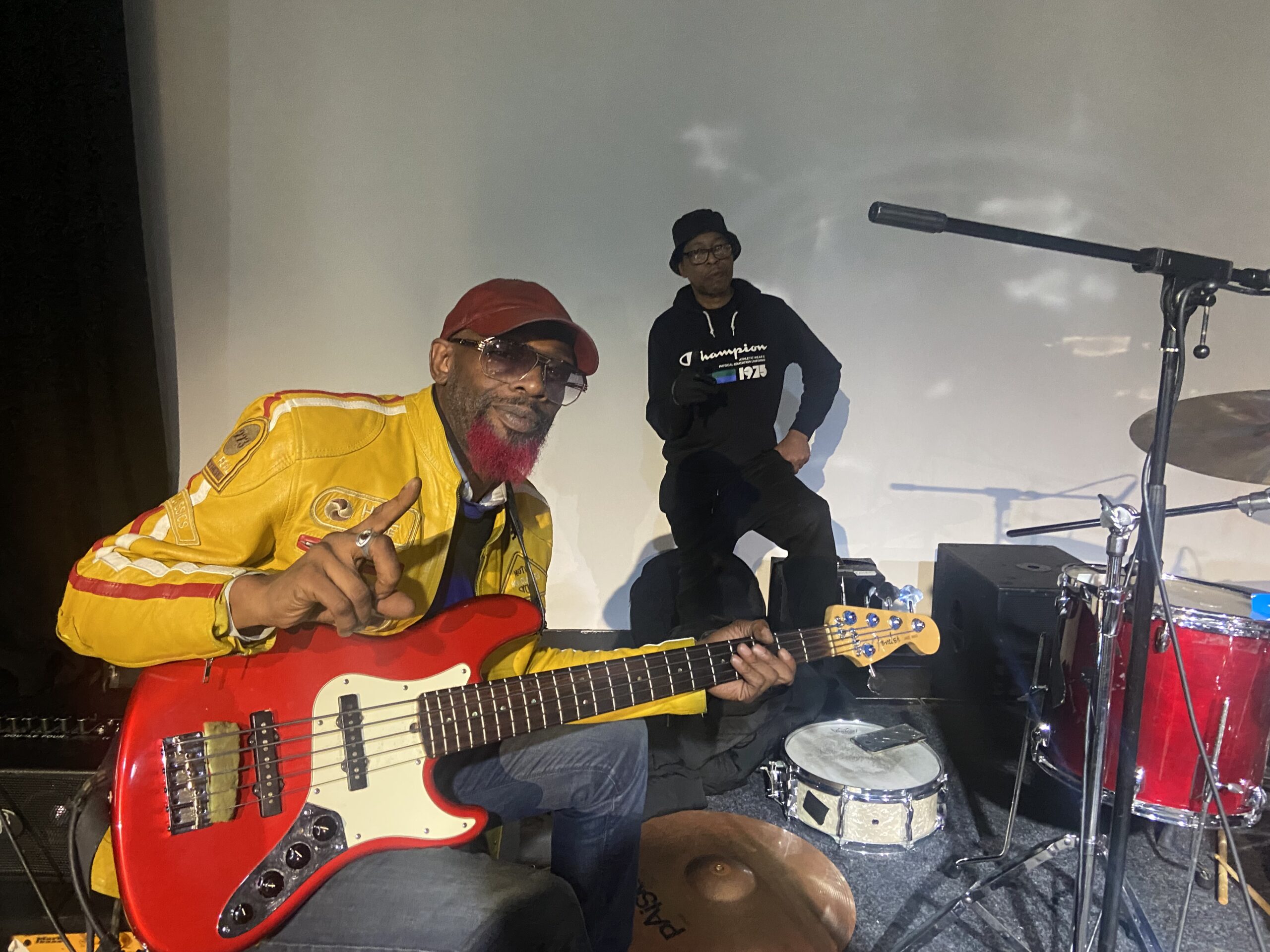
Working alongside artist and technologist Greg Hunter (Dubsahara),, together with the pioneering team at TiMax Audio, we brought together mastering engineers, live musicians, spatial audio specialists and creative technologists to explore how immersive audio could move seamlessly from the mastering studio into a live performance environment.
The workshop and live performance became far more than a technical demonstration. They represented the meeting of decades of musical innovation, immersive technology and creative collaboration, exploring how object-based audio and spatial mixing can transform not only the way music is mastered, but also the way it is experienced in a live setting.
For us, it confirmed that immersive audio is not confined to the mastering studio. It is an evolving creative language that connects artists, engineers, performers and audiences in entirely new ways. What began with Dolby Atmos has grown into a much broader exploration of immersive sound—one that continues to shape the way we approach mastering, live production and the future of spatial audio.
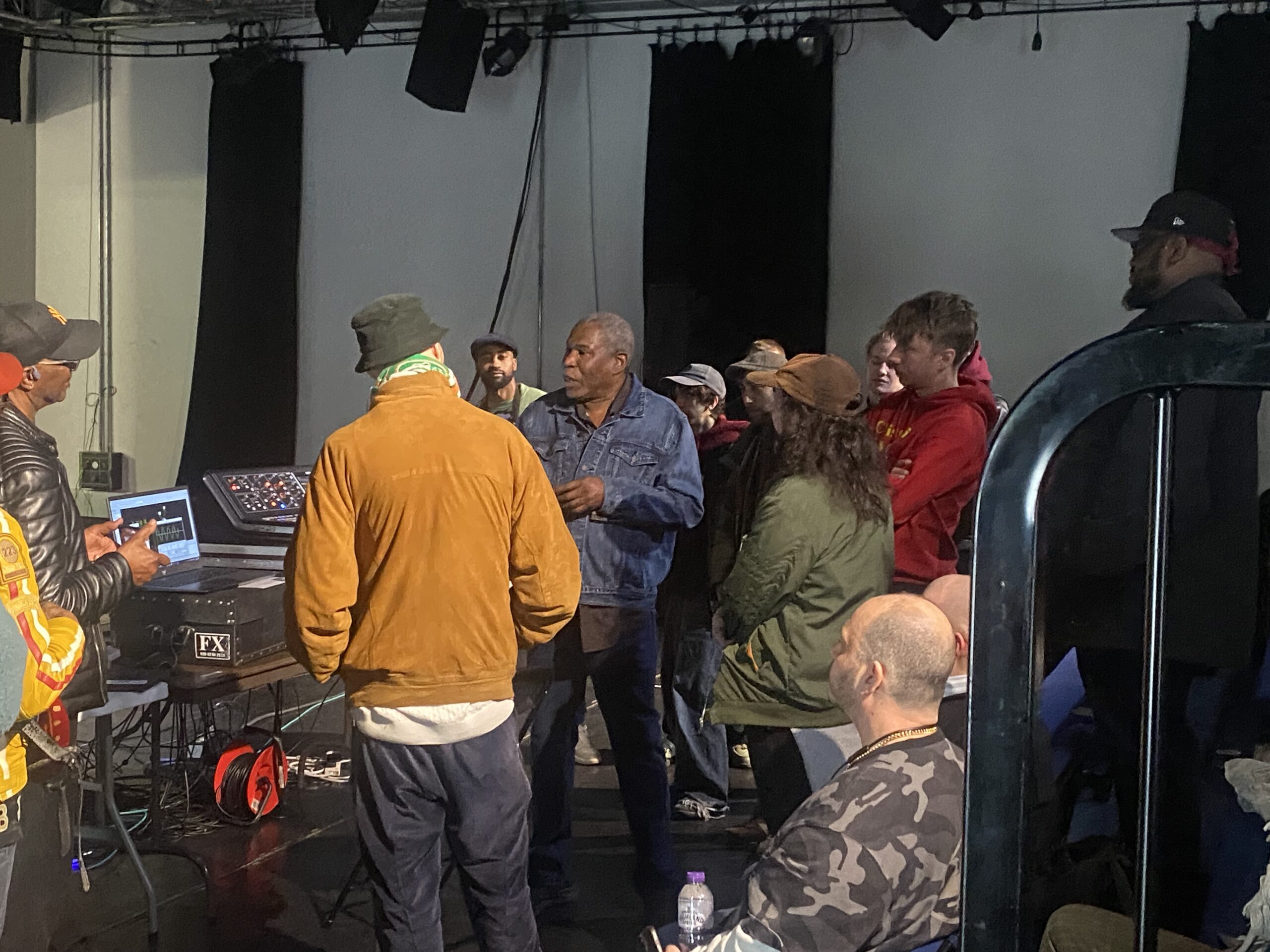
Dolby Atmos gave us a strong foundation in object-based audio, movement, localisation and spatial balance. It encouraged us to think beyond conventional left-and-right presentation and to consider how sound could occupy space around and above the listener.
But Dolby Atmos is an immersive audio format, while immersive audio itself is the wider creative and technical discipline. To understand that discipline more deeply, we wanted to hear what happened when those same spatial ideas entered a physical room containing musicians, loudspeakers and a live audience.
At Rich Mix, that relationship between studio knowledge and live performance became immediate. The room itself became part of the production, and every technical decision had to support both the music and the experience of the people inside it.
The event was technically ambitious, but it was also collaborative, practical and enjoyable. Engineers, artists and participants gathered around the equipment, listened to changes as they happened and discussed how the system was responding inside the room.
Instead of keeping the technology at a distance, the workshop allowed people to experience the relationship between the mixing position, loudspeaker placement, spatial control and musical performance at close range.
This direct exchange was central to the project. Immersive audio became something that could be heard, questioned and explored collectively rather than simply described through diagrams and software displays.
Taking Immersive Principles Live
The technology changed, but the fundamental way we thought about sound, movement and space remained familiar.
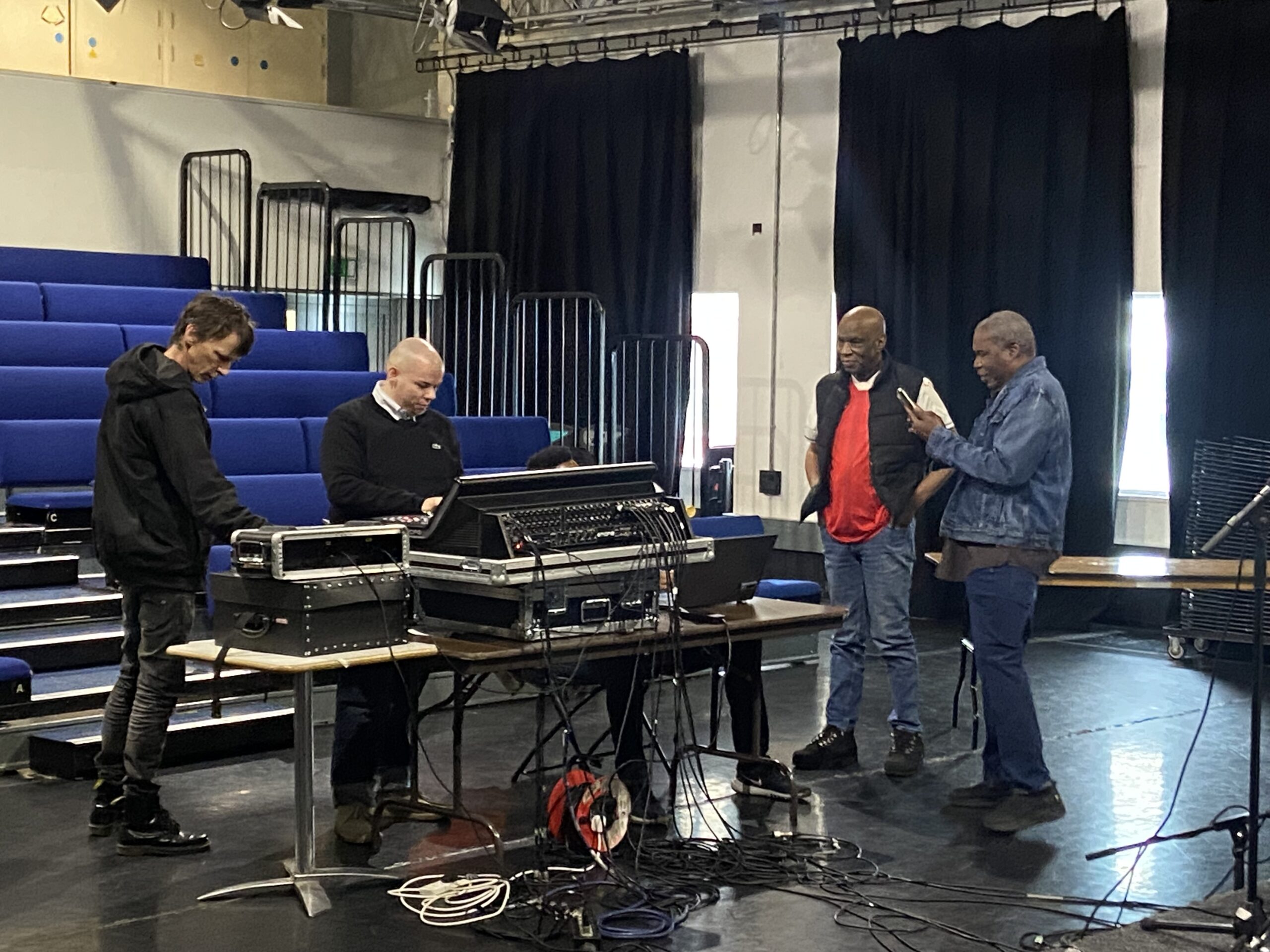
Working in Dolby Atmos had already taught us to think beyond conventional left-and-right presentation. Sounds could be positioned with greater freedom, moved through three-dimensional space and experienced from different perspectives.
At Rich Mix, London, those principles entered a completely different environment. Instead of preparing a master for headphones, home systems or streaming platforms, we were working within a physical room containing live musicians, multiple loudspeakers and an audience sharing the same acoustic space.
Every spatial decision had to work across the venue rather than from one controlled listening position. Movement needed to remain clear and musical while the live performance retained its energy, balance and connection with the audience.
Loudspeaker placement therefore became part of the creative process. The system needed to provide localisation, depth and movement throughout the room without weakening the relationship between the musicians and the audience.
Understanding the Role of TiMax
Taking immersive audio into a live venue required a system capable of positioning and moving sound throughout a real performance space.
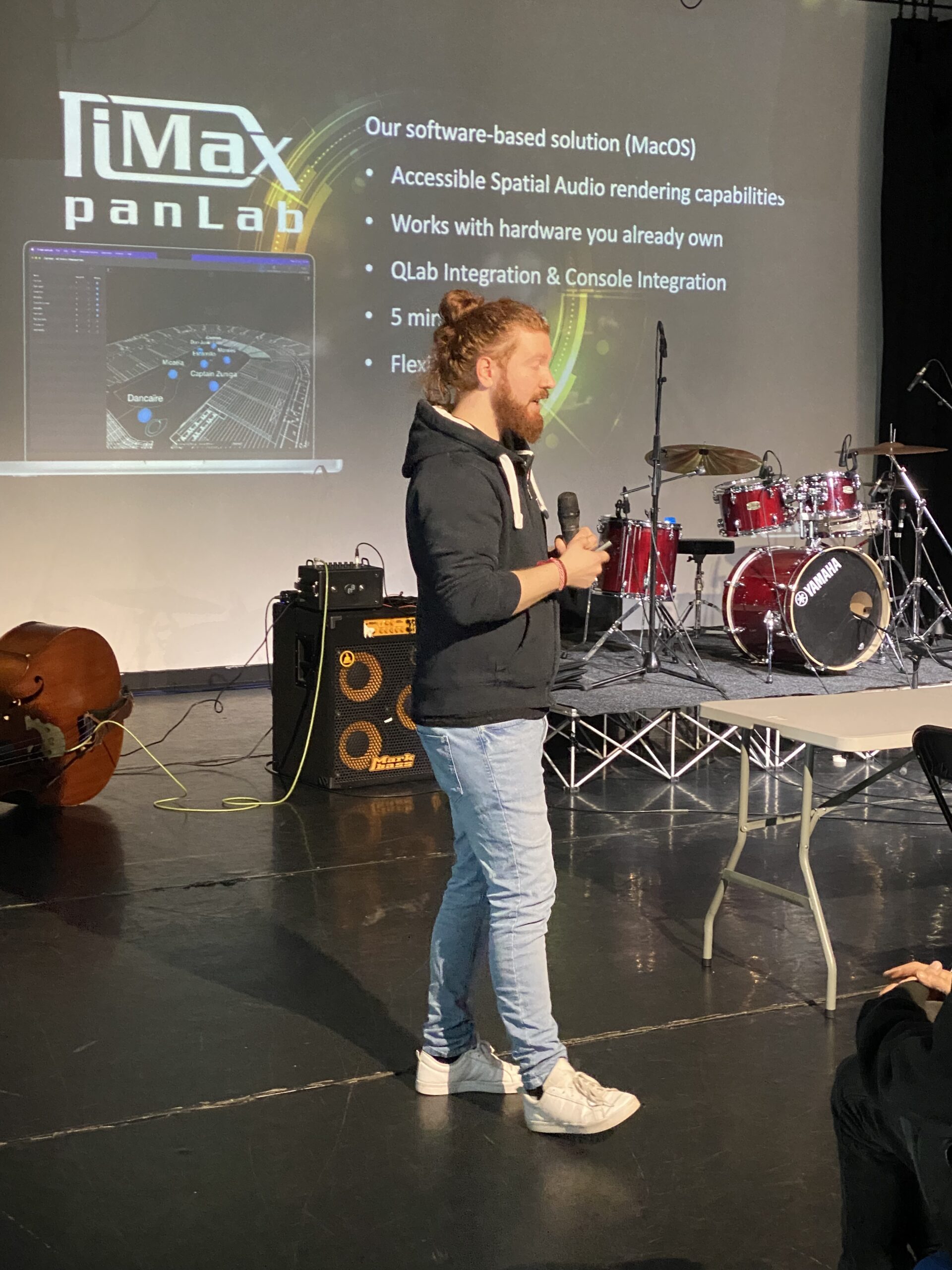
In Dolby Atmos, spatial information is carried within an object-based production and interpreted by the playback environment. A live venue presents a different challenge: the loudspeakers, room dimensions and position of the audience are already physically established.
TiMax provided the spatial control at the centre of the Rich Mix production. It allowed individual sources to be positioned and moved throughout the loudspeaker system, helping the room behave as one connected three-dimensional listening environment.
Although the delivery system was different from Dolby Atmos, the creative thinking remained familiar. We were still making decisions about position, movement, depth, perspective and the relationship between the sound and the listener.
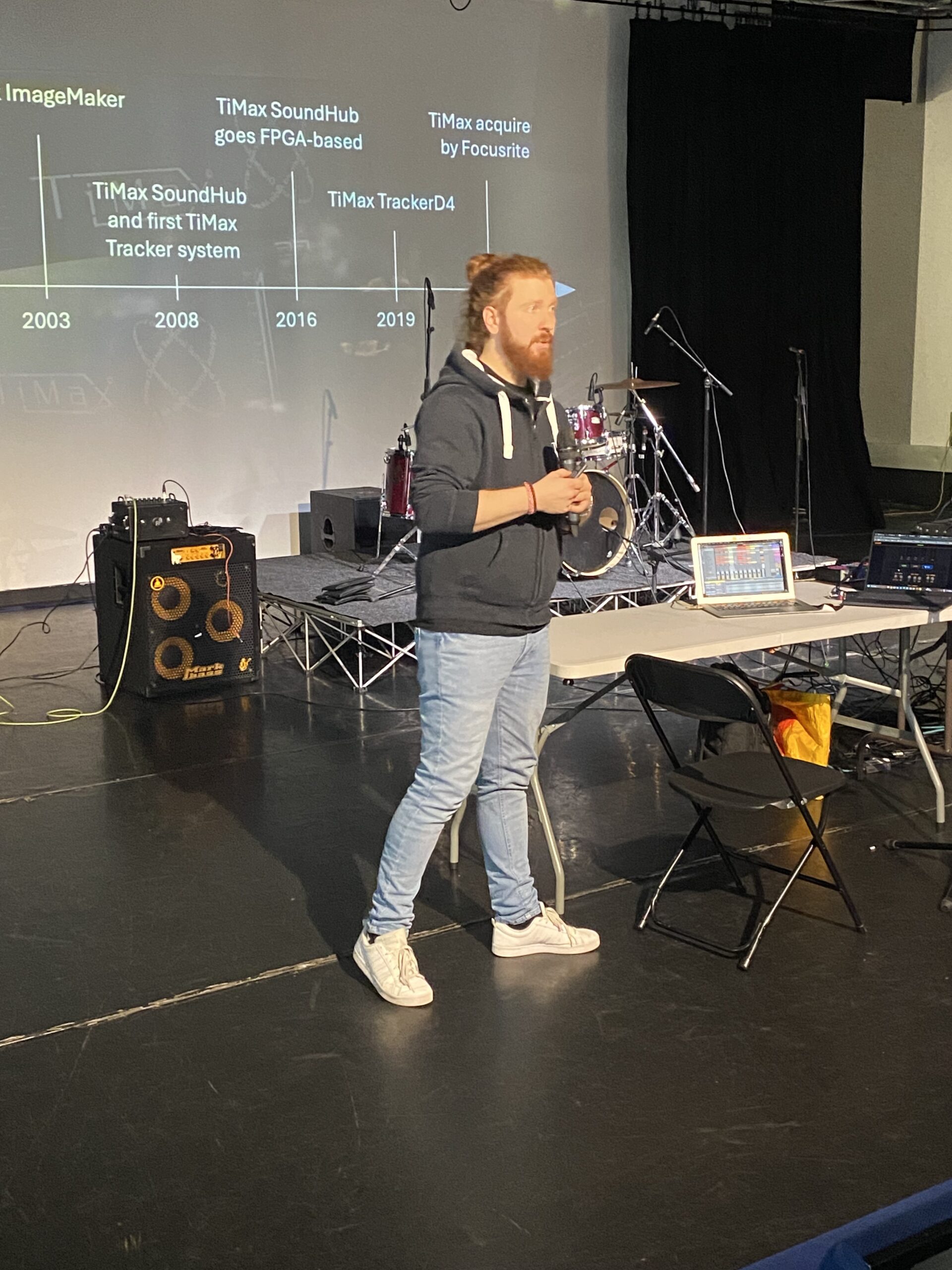
The TiMax presentation gave workshop participants an opportunity to understand how live spatial audio technology has developed and how software control, dedicated processing, loudspeaker systems and real-time performance operate together.
Once the process was demonstrated inside the room, spatial positioning became immediately understandable. A source could be placed, moved and heard responding across the physical venue in real time.
The technology was sophisticated, but its purpose remained musical. TiMax gave the team the ability to support the live performance without allowing spatial movement to become a distraction from the music.
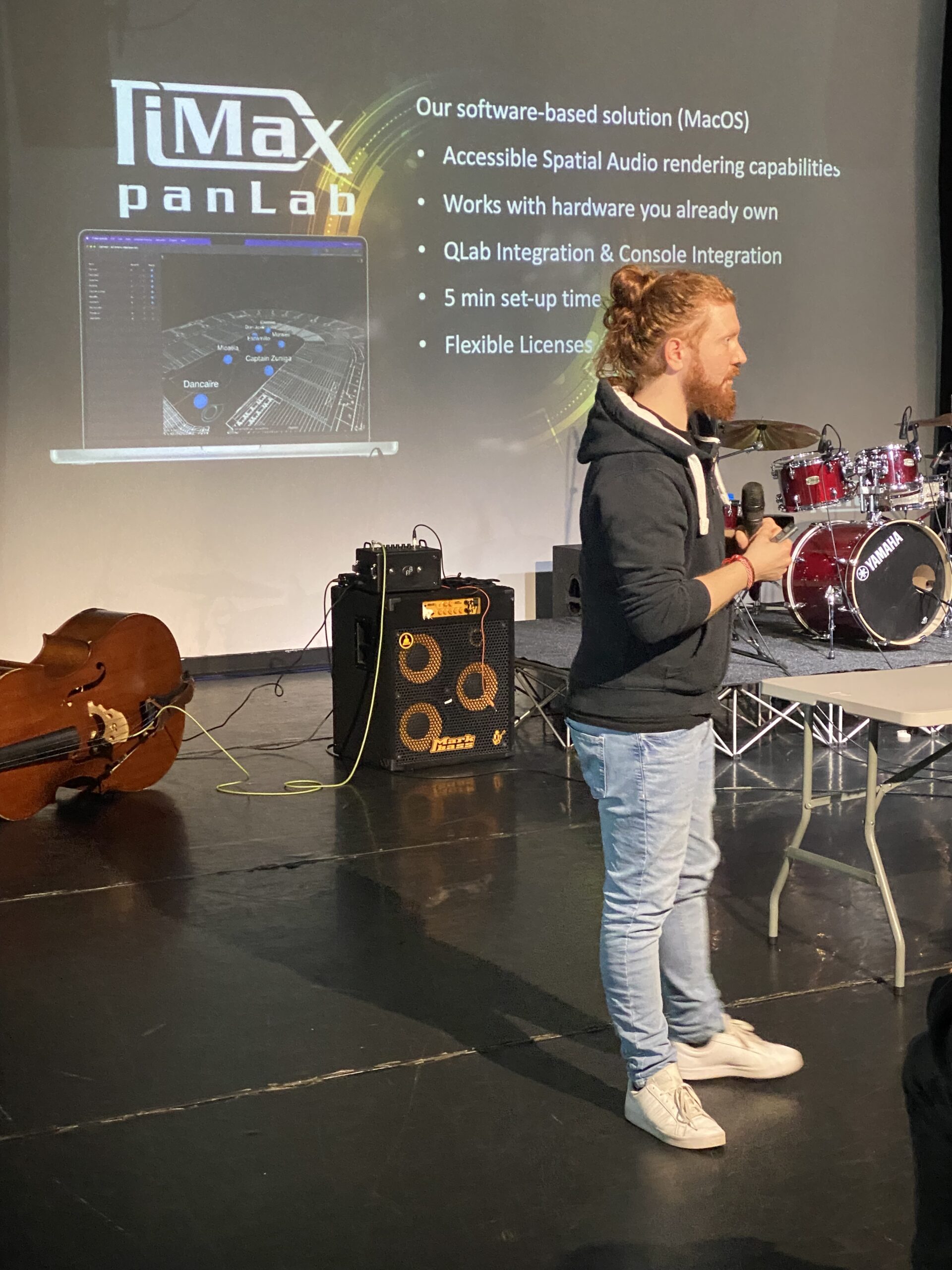
Seeing the system demonstrated in a working live environment strengthened the connection between studio immersive production and live spatial sound.
In both cases, the engineer must understand the listening space, the intention of the artist and the way movement will affect the audience. The equipment and delivery methods may change, but careful listening and controlled spatial judgement remain essential.
With the spatial system established, the next stage was to place the music and the artist at the centre of the experience.
From Live Immersive Back to the Studio
In Part Two, we explore Scientist’s relationship with dub and immersive space, the live performance at Rich Mix and how the experience returned with us to the mastering studio.
Read Part TwoContinue Your Immersive Journey
Whether you are preparing a release for Dolby Atmos, Sony 360 Reality Audio, Eclipsa Audio, MPEG-H, Ambisonics or binaural delivery, Sound Arts Mastering can help you take your project from final mix through mastering, quality control and delivery.
SOUND ARTS MASTERING